Structured Data & Schema: The Missing Link Between SEO and AI Discovery
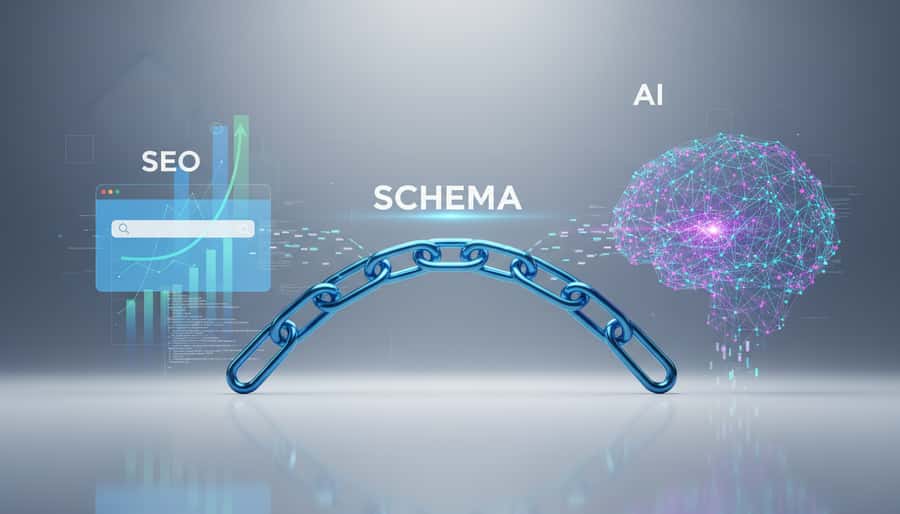
There is a layer of your website that human visitors never see, and it is becoming the most important one. Schema markup is structured data that tells machines exactly what your business is, what you sell, where you are, and what your reviews say, in a format they can trust without guessing. Google has used it for years to build rich results. Now AI assistants lean on the same signals when they decide which businesses to recommend. Most small business sites have none of it. This guide explains the vocabulary, shows you what to add first, and how to validate that machines can read it.
What You’ll Learn in This Post
What Schema Actually Is
Schema is a shared vocabulary that helps search engines and AI understand what your content is — not just what it says.
It’s metadata that describes meaning.
For example:
This information lives invisibly in your site’s code, using standards from Schema.org.
Search engines and AI models read that markup to decide whether to show your site, feature it, or cite it.
In short: Schema is how your website introduces itself to machines — clearly, confidently, and consistently.
Why It Matters More Than Ever
Schema isn’t new, but its role has shifted.
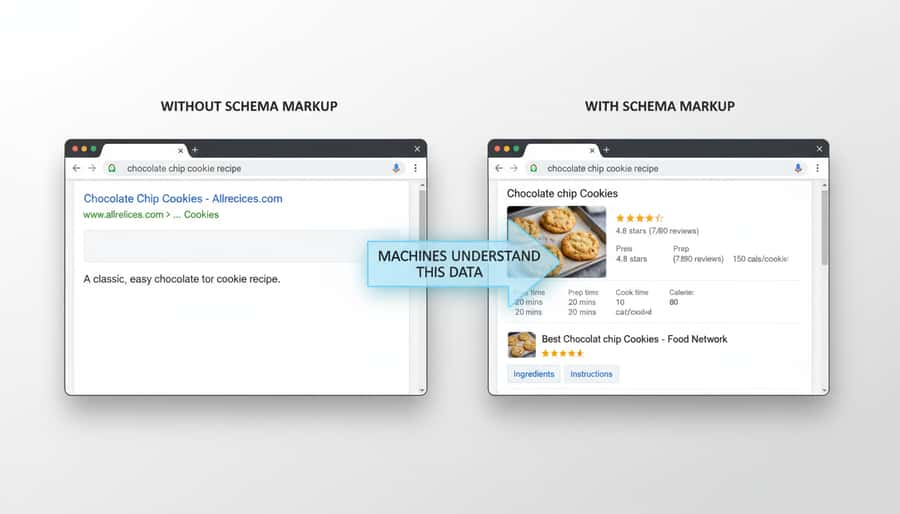
It used to be about Google’s “rich results” — stars, prices, and FAQs that made your listings pop.
Today, it’s about AI comprehension.
ChatGPT, Gemini, and Perplexity increasingly rely on structured data to verify facts, extract details, and attribute sources.
Without it, your content may exist — but remain invisible in the next generation of search.
Structured data gives your content context.
And context is what turns a page into an answer.
How to Add Schema (On Any Platform)
You don’t need to be a developer to start.
Start small — your homepage and a few key articles are enough to make a difference.
Examples:
Local Business
If you run a coffee shop, you might add Schema like this:
This helps search engines and AI understand it’s a physical business, what it’s called, and where it’s located — enabling local visibility in Google Maps, AI summaries, and voice search.
Article or Blog Post
For your blog posts, use an Article type like this:
Even this simple markup can unlock eligibility for rich snippets and AI-generated summaries.
Product or Service
Selling something? Here’s how to tell search engines exactly what you offer:
This type of structured data tells both search engines and AI what your product is and where it can be purchased.
These examples are clean, copy-ready starting points — easy to adapt for any site or platform. From here, you can experiment, validate, and expand with confidence.
How StoryPress Helps by Default
StoryPress gives every site a very basic, safe Schema setup out of the box — a clean, standards-compliant starting point that makes your content understandable to search engines and AI without over-assuming details about your business.
From there, we strongly encourage you to add your own structured data using the same tools mentioned in this post. Each main content type — Page, Collection, and Post — includes a dedicated place to paste your JSON-LD.
That means you can tailor Schema to the specific intent of each page, instead of relying on generic, one-size-fits-all markup. When you add your own JSON-LD, it becomes the version that machines see and trust.
Schema works best when it’s handled with personal care. By combining a simple default with an easy way to add your own, StoryPress gives the machines a better chance of getting your content right the first time.
The Future of SEO Is Structured
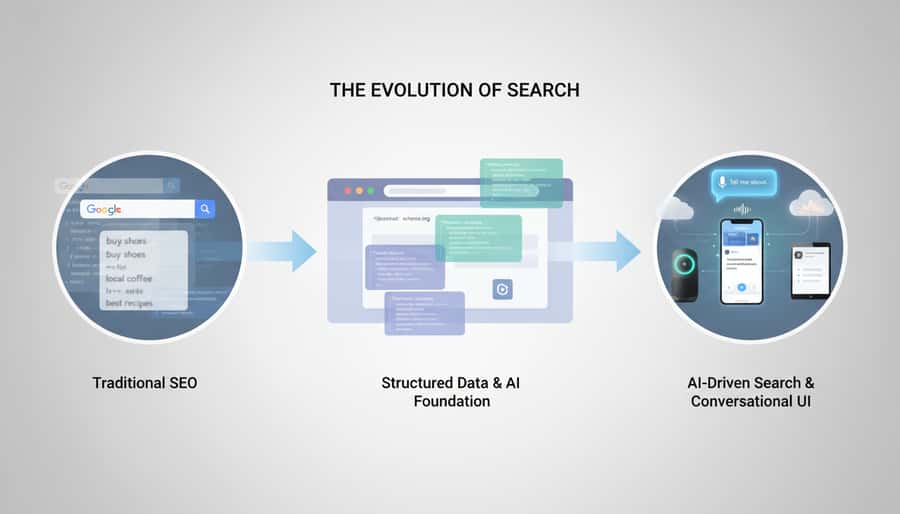
As AI becomes the interface for information, structured data becomes the interface between your website and AI.
Search engines and assistants won’t just rank pages — they’ll interpret them.
That shift rewards websites that are clear, consistent, and semantically rich.
Schema provides the structure that makes your content eligible for that future.
Key Takeaways
The web is evolving from text to meaning.
StoryPress helps your website speak that language — automatically.